
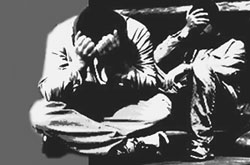
(Looper pioneers drug and alcohol treatment programs in 1970’s San Francisco)
Briefly I would like to describe what was going on in this country that helped Reality House to be needed and what gave it the impetus to keep growing. In the Sixties, the so-called Hippie movement was challenging people’s value systems in America. People were beginning to crave for instant joy. The youngst were breaking away from tradition. Drugs became the panacea. The middle class woke up for the first time since 1941 to the fact that America had a drug problem. Concurrently the Civil Rights movement was pricking at the conscious of America. Blacks and Whites were becoming allies on many issues. Everything was viewed from a Political Prospective. My experience in New York City had conditioned me for San Francisco.
Unlike New York City, we did not confine ourselves to just drug groups, we worked with all types of programs! We also decided that we were “revolutionary” on one hand and victims of the system. But first we had the responsibility to cop to the fact that. we put the needle in our own arm so it was our first duty to take care of our personal problem.
I would like to make a point on phenomenon that is persistent. Most ex-addicts become alcoholics! ‘The Habituation patterns just do not go “away.” I guess the trick is to attach something construct to the pattern once the negative has been cut out.
I guess the reason I raised the point is because it is hard to create a revolution with a bunch of “drunks, or dirty addicts. Point 2, it is very hard if not impossible to develop a program if 98% of the clients (and staff) are failure prone.
At the beginning of my work there was few professional people in the field. Drug addicts were multiplying all over America. The problem was getting out of hand. Nobody had a solution to the problem. Along, came a man with an unemployment check and a dream. His name was Chuck Dederick He was white and he was an alcoholic.
He invested his twenty dollars into an apartment for him and his friend and they began to deal with the problem. From that small beginning came forth one of the greatest organizations in the country, SYNANON! They created more forms of therapy to help treat addicts than any single organization in the country.
The people that graduated from their program criss-crossed the nation and created similar programs in New York and other places. David Dietsch helped to create one of the more famous programs, Daytop Lodge in New York City, with the help of ex-addicts like Mickey McCalip. Dr. Jaffey created one of the first multi faceted programs in Chicago, Ill. The multi-modality program in Florida and Albuquerque, New Mexico were all created by Daytop graduates or Synanon people!
Reality House people also created programs or helped staff some of the programs across the country. Ex-addicts were at a premium. They could not re-produce themselves fast enough.
The professionals were watching this invasion of their turf. Everything therapeutic is supposed to be the domain of the psychiatrist or psychologist and doctors. They would not take on the responsibility, now someone else was doing the job.
The money was beginning to trickle into this new field. Ex-addicts were picking up some status. The mental health money people were not consulting the psychiatrists nor the psychologist about the problem, they were deferring to the lay people. The professional consulted their lobbies in Washington. They wanted a law passed that no program could operate without an M.A. or PH.D. in charge of the clinical aspect of it.
They were pretty clever. They knew full well that the traditional models did not work. They created an alliance with the ex-addict. They wanted to learn this new approach to the problem. So they act up therapy sessions where he was the leader and the ex-addict was the co-leader The ex-addict could not refuse such an offer. It appeared that the psychiatrist or the psychologist was legitimizing him.
Special training seminars were created where ex-addicts were brought in as consultants while the head person was the professional, taping, recording all the workshops so he could take back the material so he could analyze it and package it for his purposes! As the professional began to take over most programs he would restructure the program totally. He would also create new terminology and with the help of the government, new guidelines.
In most programs, the ex-addict was working on the firing line. In this position most ex-addicts and Lay staff would burn themselves out. Let me back up for a minute. Part of the Love Affair between the ex-addict and the professional was Social Acceptance.
They would have social gatherings where freak parties would go on night after night. Cocaine and reefers were plentiful. The psychiatrist and the psychologist knew better than anyone else that people’s habituating patterns just do not go away. You may divest them of active energy for awhile but they are always waiting to flare up again.
The ex-addict may leave heroin alone but he is a natural sucker for coke, alcohol, or pot. The psychologist and psychiatrist also know that if you are on the firing line and you are eating up ~hit on a continuium and with no real support it will finally get to you.
The Ex-addict forgot who he was! He was letting his shit hang out in the open. They kept the coke flying and they fed him all the pussy he could eat. He thought he had status. He was under the false impression that he had arrived. But what was developing was a shit list in Washington. They knew who was f-cking around with drugs yet they would pay these people incredible amount of consultant money to consult with programs all over the country and also to monitor them.
When things finally got out of hand, the new guidelines came out. Most ex-addicts were discredited. Ex addicts were dying from coke overdoses, heroin and diseased pussy. It got to the point that most ex-addicts began to hate addicts and addicts began to hate ex-addicts.
The promise of, “ we can help you get cured,” was a promise that was almost impossible to deliver only every addict that makes it in programs, there were probably 50 who fail. Programs fail because the total community doesn’t get involved. The business world doesn’t cooperate with money and jobs. The churches, schools, and human resource agencies are into their own special trip. There is no coordination in the effort to help the programs to achieve it’s ultimate goal.
The successful return to the community, clients who are prepared to make a contribution to society and themselves. Most times the ex-addict finds himself defending why this in not taking place. The ex-addict cannot even interpret the program’s goals. He cannot even explain his role in relationship to the other staff roles.
The ex-addict’s position is a lonely position. He is no longer “in.” He is no longer a prime source! His salary demands are out of touch with the real of what they are willing to pay him. At one time his skills and experiences were sufficient. Now they demand that he bring degrees with his resume.
His skills experiences is what created a multi-million dollar industry. But he did not write the new guidelines so he is back where he started from; no marketable skills for common market. Nobody wants and admires him as one of the beautiful people! He should prepare himself for the new day.
The total drug program in America will be revamped. Heroin maintenance is on the horizon. Love is still part of the answer. He should acquire other skills that do not necessarily depend on the substance abuse field, is a smart way to go. It at least would give the impression that you are not afraid of working yourself out of a job. My advice to him is, stop calling himself an ex-addict worker. Go to school.
When applying for a job, just say you are a plain counselor, if you are not happy doing that then go out and create new and innovative programs! Now is the time! Especially in San Francisco. The so-called Giant is dead. The Division for Special Programs, the San Francisco Coordinating Council on Drug Abuse is killing itself by taking on less responsibility in a time when they should be taking on more responsibility for new changes.
Methadone is in bad shape across the country. There are more drug addicts now than when I first got started. There are some good parts left in each program. But there is too much self interest to put them together collectively and make them work.
I am now (Ed: this is 1977) at Antioch College West preparing myself for the new day. I am learning about all of the therapies from the professionally oriented clinicians. I am looking at new and old concepts of behaviorism, new approaches to psycho~ breakdowns and insights in to other modalities. Basically I am a therapist. I must be able to explain what I do rather than just doing it, like I did in the past.
My old tools need to be sharpened or discarded. 1 need new ideas to refresh me. An academic setting can be a beautiful setting for a person like me, but I must be careful and not over reach. I should take what I need and go back to the community where I am happy and where I fulfill a need.
Go Back to Chapter 9
Go Back to Index of Chapters
